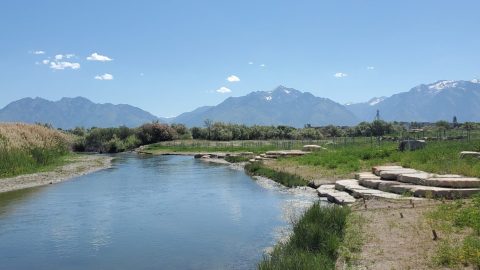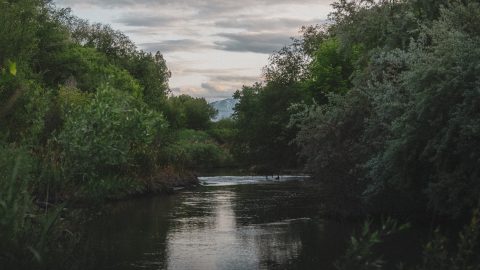







Goal: Protect and preserve natural open spaces
Protecting and preserving natural open space benefits ecological health and recreation. The existing natural open spaces along the corridor are used by a wide variety of species ranging from plants and birds, to reptiles and amphibians, to land mammals (including humans). Protecting and preserving natural areas are a consistent public priority for the Parkway.
1. DEVELOP ACCESS RESTRICTIONS BASED ON SITE SENSITIVITY
The geographic scale of the Jordan River Parkway enables it to accommodate both human use and ecological functions. Some areas are better suited to accommodate people and others are more important to wildlife. Providing areas with limits on access where appropriate can help balance the needs of both humans and natural ecosystems. Natural open space with open access and natural open space with limited access ranked as the first and second (respectively) most important types of places in the Parkway during the 2020 Blueprint Refresh Survey effort.
2. CREATE AND ENFORCE DEVELOPMENT LIMITS IN NATURAL OPEN SPACES
Limiting new development in sensitive areas is central to preservation goals in the Parkway. Acquiring land or development rights and regulatory tools can be used to limit development where it’s not appropriate due to habitat or flooding concerns.
3. USE REGULATORY TOOLS TO LIMIT THE IMPACTS OF DEVELOPMENT WITHIN THE CORRIDOR
Local, state, and federal regulatory tools can help limit the impacts of development and redevelopment in the Parkway.
Goal: Optimize habitats and natural ecosystems
Managing habitats and natural ecosystems is a key goal to maintain the ecological integrity of natural areas and to increase the function of these areas along the river corridor. In order to effectively manage these areas, property owners need to understand the benefits of intact ecosystems in the provision of ecological services such as recreation, spiritual opportunities, regulation of flooding, and sustaining nutrient and water cycles.
Natural areas increase people’s quality of life and help to maintain beneficial processes in the face of changes in climate and weather. While many people believe that natural ecosystems maintain
themselves, some management of these resources is essential in urban contexts to ensure areas are not overtaken by weeds and other undesirable impacts.
1. SUPPORT DESIRABLE , NATIVE , AND BIODIVERSE ECOSYSTEMS
The presence of desirable and native plants in the Parkway is central to wildlife viability, ecosystem services, and human enjoyment.
2. DEVELOP MONITORING AND EVALUATION PLANS
Enhanced monitoring and evaluation are needed to understand current ecological conditions in the Parkway and to develop goals and targeted strategies for improvement.
3. RESTORE QUALITY HABITAT FOR WILDLIFE
In addition to their intrinsic value, wildlife that visit the Jordan River Parkway or make it their home provide ecosystem services and viewing opportunities. Spotting a beaver or great blue heron can be one of the most inspiring experiences in the Parkway.
4. DEVELOP AN EDUCATION OUTREACH PROGRAM FOR LAND MANAGERS
Land managers and landscaping companies can make a big difference on the health and connectivity of Jordan River ecosystems.
5. PROVIDE RESOURCES TO LANDOWNERS
Most of the land surrounding the Jordan River is private property. Landowners may be able and willing to manage their landscapes in a way that benefits river ecosystems if provided with guidance, incentives, and/or information.
6. DEVELOP ROBUST ADAPTIVE MANAGEMENT STRATEGIES
Adaptive management is a system of interactive co-learning and knowledge co-production by resource managers, stakeholders, and scientists. Driven by a strategic focus on a desired future state (such as those identified in the Blueprint), monitoring and evaluation of outcomes are used to refine projects and programs or replace them with more promising interventions.
7. ENHANCE COORDINATION BETWEEN ENTITIES ALONG THE RIVER
It is important to foster coordination between all of the entities involved in the Parkway to promote consistency and limit habitat fragmentation.
8. TAKE ADVANTAGE OF AVAILABLE FUNDING SOURCES TO SUPPORT HABITAT AND ECOSYSTEM MANAGEMENT STRATEGIES
Apply for available resources including those provided by the Utah Watershed Restoration Initiative, Utah Forestry, Fire and State Lands Habitat Restoration Grants, and Utah Department of Agriculture and Food Invasive Species Management Grants to aid in the implementation of local and regional projects.