






Goal: Improve safety and security while fostering a comfortable environment for recreation and leisure
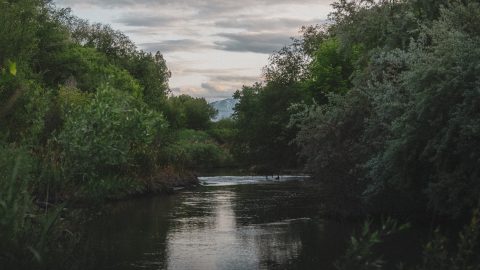
The accessibility, continuity, and natural habitat of the Jordan River make it a great destination for recreational visits but can also contribute to conditions that may make visitors feel unsafe. 24 percent of people who responded to the 2020 Blueprint Jordan River Refresh survey indicated that feeling unsafe prevented them from visiting the Parkway, or from visiting more often. Women were especially likely to express safety concerns related to visiting the Parkway alone or after dark. Being alone on the trail between access points, traveling below underpasses, or passing areas of dense vegetation can leave
some visitors feeling vulnerable.
Many organizations can play a role in improving safety as well as the experience of visitors in the Jordan River Parkway. Goals and strategies listed elsewhere in the Blueprint such as widening trails, educating visitors about appropriate etiquette, and managing vegetation along the trail also have significant potential to improve people’s sense of safety. Because the Parkway is a place of recreation and leisure, it is important to balance safety improvement efforts with maintaining a welcoming environment for all. Increasing patrols ranked as the top safety strategy listed in the 2020 Blueprint Jordan River Refresh Survey. However, some individuals shared that they feel threatened or uneasy in the presence of armed police officers.
STRATEGIES:
- Collaborate across agencies and organizations to ensure that the most appropriate people are responding to issues and emergencies. When collaborating, understand how funding impacts different agencies’ responses to problems along the Jordan River. Consider the responsibility of different agencies when making decisions about who will respond to different incident types.
i. Depending on the situation, different agencies may provide the most effective response to address issues along the Jordan River. Police may be the best response to some situations, while at other times social workers or other social service agencies like Volunteer of America (VOA) or Catholic Community Services may provide the best response. Other times, multiple agencies/organizations may respond to events together. Collaborating across agencies before issues arise will allow a strategic response when issues are reported. Providing signage throughout the Parkway about the appropriate entities to contact about different issues can help support this strategy. - Utilize bicycle or foot patrols, rather than vehicle patrols, to monitor the Parkway. The Utah Division of Forestry, Fire and State lands
purchased electric bicycles to use for patrols in the Parkway to avoid using larger vehicles that can disrupt recreational activities and damage habitats. - Coordinate with safety and social service agencies and organizations working in the Jordan River Parkway to engage nearby
residents and visitors to ensure incident response reflects the needs of the community. Consider convening a cross-agency
listening session once a year to discuss safety concerns and challenges with the public. - Develop and expand volunteer ranger programs that allow community members to participate in safety patrols.
i. Explore opportunities to procure funding for volunteer ranger programs or to partner with community organizations to sustain
these efforts.
ii. In 2015, the University of Utah’s Department of Parks, Recreation, and Tourism developed an Urban Rangers program in partnership with the National Park Service to serve parts of the Bonneville Shoreline Trail and Jordan River Trail. U students acted as volunteer rangers to become stewards of the area, but the program ended due to funding limitations after a couple of years. Factors that may contribute to the success of this and future programs include leveraging institutional partnerships and resources (such as universities) to recruit, organize, and mobilize volunteers with limited funding sources; developing champions to sustain the effort; and procuring funding that can be used throughout the year to meet the needs of the program. - Use crime reporting data to identify crime hotspots and key access points along the river. Consider completing a system-wide
safety audit and using this data to inform public safety responses. - Share crime and safety data with users by developing a public dashboard or app with mapping capabilities where users can report
issues and see other user-generated and law enforcement reports of crime based on location.
i. Consider adding this functionality to MyJordanRiver.org or posting on public safety or police department websites. - Ensure that emergency responders are familiar with the north and south coordinates along the Parkway and their relations to
wayfinding signs and landmarks.
Goal: Manage wildfire risk and prepare for response and recovery
Wildfire is a natural part of ecosystems throughout the Intermountain West and has shaped many of the ecosystems along the Jordan River,
but wildfire along the Jordan River Corridor needs to be considered in management planning to ensure risks are managed and mitigated where
possible. Fire risk is a concern in natural spaces throughout the Jordan River Parkway and several fires happen in the Wildland Urban Interface
(WUI) along the River every year.
Wildfire in natural areas along the River Corridor not only threatens habitat and open space, but also poses a risk to nearby communities and
infrastructure. Reducing fire risk through preventative mitigation efforts such as through the creation of defensible space can help to prevent the
ignition and spread of fires. Preparing natural areas to reduce the risk of wildfire can benefit people and ecosystems in the short- and longterm
because these sensitive areas can be easily damaged through fire suppression efforts.
In the case of a fire, an effective response is critical to reduce damage and safety concerns, and response to fires in these areas requires special
consideration due to the natural and human resources that are threatened by fire. Specialized training for groups that respond to fires and developing an understanding of how fires affect natural areas are needed. Following a fire, recovery efforts including replanting and erosion control restore the
ecological and recreational value of a burned area.
1. MITIGATE WILDFIRE RISK
Most wildfires in Utah are caused by humans, therefore preventing fires from sparking is the best strategy to maintain integrity of ecosystems and recreation areas along the Jordan River Parkway. Long-term land management strategies and cross-agency collaboration are a critical component to planning and mitigation. Educating the public about fire risk and reducing illegal camping can also help reduce fire risk in the Jordan River Parkway.
STRATEGIES:
- Integrate fire mitigation into vegetation and land management practices on public and private land throughout the Parkway.
i. Add preventative fire management strategies into long-term land management efforts and plans.
ii. Create defensible space around mature riparian forests and reduce “ladder fuels” to reduce the ability of ground fires to spread to tree canopies.
iii. Partner with the Greater Salt Lake Unified Fire Authority Wildland Division and other fire agencies to conduct project work to reduce fire-prone vegetation in at-risk areas.
iv. Consider prescribed burns in overgrown areas along the river, followed by appropriate restoration and revegetation efforts. - Work to reduce human-caused fire risk
i. Educate visitors about the fire risk along the Jordan River Parkway and encourage safe behaviors and practices.
ii. Discourage open burning and smoking in the Parkway.
iii. Watch for catastrophic wildfire during critically dry periods with red flag weather conditions and prepare for response.
2. QUICKLY AND EFFECTIVELY RESPOND TO WILDFIRES
In the event of a wildfire in the Jordan River Parkway, having a plan of action is key to reducing damage and protecting neighboring communities. Identifying access points for firefighting vehicles aids in quick and effective response in an emergency event. It is also helpful to know where sources of water are located.
STRATEGIES:
- On a local fire agency basis, create actionable response plans for the stretches of the Jordan River the agency is responsible for, incorporating the best practices highlighted in the accompanying strategies. These plans should also include recovery efforts or be closely linked to recovery plans.
- Prioritize the protection of mature riparian forests in addition to adjacent structures in firefighting efforts.
- Strive to minimize the impact of fire response on wetlands and riparian areas. For example, avoid driving heavy vehicles into sensitive areas when possible and don’t remove more vegetation than necessary.
- Identify areas that need expanded access for heavy vehicles from first responder agencies to improve access during emergencies.
i. Coordinate across municipalities and at the county level to identify areas that need vehicle access. Seek to minimize habitat and forested area disruption caused by the installation and maintenance of access roads.
ii. Improve access to gated areas. This may include developing a universal gate key for emergency responders along the Parkway. - Ensure that emergency responders are familiar with the north and south coordinates along the Parkway and their relations to wayfinding signs and landmarks.
3. SUPPORT RAPID RECOVERY FROM FIRES
Following a fire event, recovery of the area will require revegetation. Fire recovery may be an opportunity to improve conditions for wildlife habitat, enhance scenic and recreation values, and limit erosion impacts.
STRATEGIES:
- Revegetate burned areas with beneficial riparian and upland species.
- Seed burned areas shortly after fires to limit erosion and prevent invasive species from becoming established.
i. Coordinate with community members, volunteers, and local organizations to assist with planting trees and shrubs after areas have been stabilized.
ii. Develop medium- and long-term follow up strategies for ensuring that seeding and planting
efforts have been successful and invasive species are kept to a minimum.