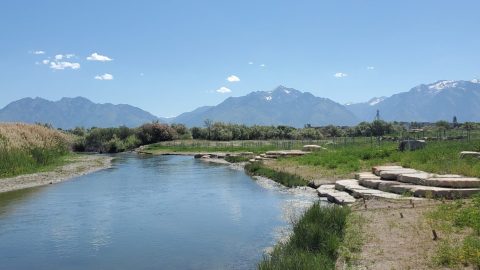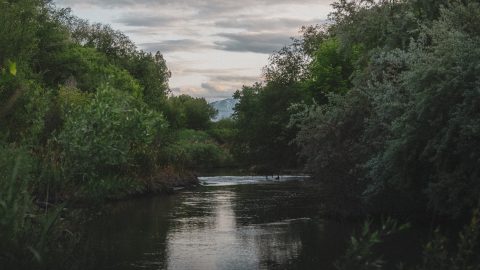







Goal: Enhance opportunities for recreational uses and active transportation throughout the Parkway
Protecting and preserving natural open space benefits ecological health and recreation. The existing natural open spaces along the corridor are used by a wide variety of species ranging from plants and birds, to reptiles and amphibians, to land mammals (including humans). Protecting and preserving natural areas are a consistent public priority for the Parkway.
The Jordan River Parkway is a unique asset for the Wasatch Front region because it provides incredible recreation opportunities in a rapidly urbanizing region. Preserving and enhancing recreational opportunities and amenities along the entire length of the Parkway will be key to ensuring its long-term success. The following goals and strategies aim to enhance recreation along the Jordan River Trail by improving existing trail conditions, developing more and diverse opportunities for various forms of recreation, creating targeted programs that increase the public’s awareness of the Jordan River Trail and other recreational opportunities in the Parkway, and enhancing connections to the trail from areas that are currently underserved.
1. DEFINE AND IMPLEMENT CONSISTENT TRAIL AND PATHWAY STANDARDS THAT EMPHASIZE SAFETY, COMFORT, AND FUNCTION
Trail-based activities such as walking, running, and biking are the most popular activities in the Jordan River Parkway. Developing a trail that is consistent, seamless, and safe is key to creating a successful trail. Currently, many sections of the Jordan River Trail do not meet standards due to its fragmented and incremental development. Developing a uniform design guide for the entire trail is key to ensuring that older sections of trail are retrofitted, and newer sections of trails are built to standard.
STRATEGIES:
• Create a design guide for the Jordan River Trail that defines design standards that meet or exceed industry standards such as the AASHTO Guide for Development of Bicycle Facilities or International Mountain Biking Association Guidelines for natural surface trails and ensure that all trails meet these standards.
• Create a list of trail sections that do not meet current standards and develop a prioritization schedule for improvements. The recreation map at the end of this section shows 2020 conditions.
• Improve sections of the Jordan River Trail that currently flood during high water events to allow more consistent, reliable use of the trail. In instances where preventing flooding across the trail is infeasible,
designate suitable detours.
• Identify high use stretches of trail by conducting counts near transit stations and other popular destinations. Use the Path Level of Service Calculator from the Federal Highway Administration to determine whether strategies including widening, striping, separating modes, and developing a parallel trail should be pursued.
• Conduct a Crime Prevention through Environmental Design (CPTED) audit to identify and mitigate issues related to vegetation, lighting, visibility, etc.
• Develop safety and use guidelines for battery powered or assisted e-bikes and other mobility devices, and provide access to electrical outlets for e-bike charging in convenient locations such as trailheads, pavilions and rest areas.
• Expand the availability of electric vehicle charging at all trailheads and parking lots where possible (and electric power is available) to support EV infrastructure development, reduce vehicle emissions, and address broader air quality, climate change and public health goals.
2. ADOPT AND IMPLEMENT A CONSISTENT MAINTENANCE SCHEDULE FOR THE JORDAN RIVER TRAIL THAT PROTECTS TRAIL INVESTMENT AND EXTENDS ITS LONGEVITY
Regular annual maintenance including drainage and tread repair, inspections, pruning and vegetation removal, sign repair or replacement, winter plowing, and structure maintenance is a critical component of a high-quality trail. Without proper and timely maintenance, the Jordan River Trail is at risk of erosion,
overgrowth, and degradation, which can have a negative impact on both safety and the user experience and may result in the trail needing to be rebuilt. Trail maintenance is also crucial for minimizing impact to the natural environment, wildlife, and aesthetic beauty of the landscape.
STRATEGIES:
• Prioritize Jordan River Trail improvements to meet maintenance standards.
• Actively engage with citizen groups, partner agencies, private developers, and related organizations on an
ongoing basis to assess trail needs and coordinate implementation of projects.
• Expand the puncturevine bounty program and develop a best practices toolkit for eradicating puncturevine.
i. Salt Lake City’s Puncturevine Free SLC resources provide information about identifying, removing, and reporting puncturevine.
• Develop best practices manual for maintenance, including guidance on mowing, crack sealing, chip sealing, pavement surfacing, winter maintenance, and bank/trail stabilization. Work with managing agencies and jurisdictions to promote consistent maintenance practices.
• Seek out additional funding opportunities for the Jordan River Commission and municipalities to maintain the trail.
3. PROVIDE ADEQUATE RECREATIONAL AMENITIES IN A VARIETY OF SETTINGS, INCLUDING BOTH PASSIVE AND ACTIVE RECREATIONAL USES
The Jordan River Parkway offers numerous recreational activities, including passive options (such as birding, painting, and sitting) and active options (such as biking, walking, and fishing). Developing additional amenities will support this diverse mix of users.
STRATEGIES:
- Develop ADA accessible pull-outs and boardwalks in key habitat areas to encourage passive recreation, such as bird-viewing, painting, meditating, and observing.
- Work with local community groups to identify key locations that provide superior nature observation.
- Design and implement interpretative signage that educates users on their surroundings. This includes signage identifying native flora and fauna, ecological processes, and cultural history.
- Develop connections to the Jordan River Trail in areas that don’t currently have access. Coordinate with local Parks, Open Space, and Trail Plans to identify opportunities.
- Explore opportunities to create natural surface trail networks within the Jordan River Parkway including researching and identifying key areas for developing designated single-use trails and bicycle skills parks. This could involve working with municipalities, conducting surveys, noting areas of high demand, and working with local community organizations such as the Salt Lake Valley Trails Society.
- Improve knowledge of the fisheries in the Parkway through population monitoring, habitat inventories, etc. Prioritize improvements to fisheries based on location and impact.
- Evaluate options for supplemental fish stocking in target fisheries.
- Develop a prioritized list of areas to add fishing piers, platforms, contoured bank slopes, etc. to facilitate angling from the shore. Prioritization could be based on fish populations and habitat, proximity to other improved fishing opportunities, and the availability of infrastructure that could be enhanced to provide fishing opportunities.
- Educate anglers about the safety of consuming fish from the river based on current concentrations of mercury and PCB levels and harmful algae blooms.
4. COORDINATE EVENTS AND PROGRAMS TO HIGHLIGHT AND ENCOURAGE RECREATION AND STEWARDSHIP
Organized events and programs such as the “Get to the River” festival are some of the best ways to build interest in and support for the Parkway.
STRATEGIES:
- Collaborate with municipalities to promote trailheads along popular transportation routes.
Partner with local organizations, like NeighborWorks Salt Lake and others to raise awareness and bring attention to the Jordan River Trail. - Expand opportunities for bike and equipment rentals and loans, including providing Green Bike stations near high ridership transit stops and key high-density areas near the Jordan River Trail where feasible. Other rental equipment needs include kayaks, canoes, and fishing gear.
- Partner with Bike Utah on youth learn-to-ride programs using the JRT as a safe route, including listing potential schools that would benefit from this opportunity.
i. The Youth Bicycle Education and Safety Training (BEST) Program teaches more than 3,000 Utah kids every year how to experience their communities safely and confidently by bicycle. The Program is a 4-hour, in-class and on-bike program taught over four consecutive days at schools around Utah, targeting students in the 4th to 7th grades. Bike Utah provides trained instructors, bicycles, helmets, and all other equipment for the duration of the program at no cost. - Host events such as the “Golden Spoke” and “Get to the River,” as well as group paddles, land and rowing races and relays, and fishing events.
i. Develop a streamlined process for hosting multi-jurisdictional events, such as running, walking, and biking races, along the Jordan River. Coordinating with multiple municipalities and counties is a current barrier to event planning. - Create a campaign that highlights the different recreational and cultural opportunities available throughout the Jordan River corridor.
- Collaborate with UTA to advertise river recreation trips.
- Communicate and work collaboratively with public health providers and transportation organizations to ensure that trails and pathways data, policies, plans, and systems are monitored, shared, and optimized to promote community health.
5. DEVELOP A WATER TRAIL SYSTEM DESIGNED TO SERVE SMALL NON-MOTORIZED WATERCRAFT, SUCH AS CANOES, KAYAKS, STAND-UP PADDLEBOARDS (SUPS) AND ROWING SCULLS
Developing a water trail system that is designed to serve small and non-motorized watercraft users will enhance the overall visibility of the river and support its designation as one of the Salt Lake Valley’s premier outdoor attractions.
STRATEGIES:
- Map water hazards and barriers in the river. Identify and develop portage options and prioritize barrier removal/mitigation strategies.
- Inventory existing river access points and associated facilities and develop a replacement schedule.
In coordination with municipalities and counties, design, construct, and jointly manage a water trail system and supporting facilities, such as restrooms, parking areas, water features, seating, etc. - Develop a prioritized list of desired water trail infrastructure and access improvements for annual review by the Jordan River Commission, Utah Division of Forestry, Fire and State Lands, Utah Division of Wildlife Resources, and Utah Division of Parks and Recreation Boating Advisory Council for funding consideration and coordination.
- Monitor paddle craft use in the River to better understand the popularity of river trips and trends over time.
- Develop a Water Sports Center along the riverbank to support a growing and educated community of recreational users.
- Further develop the Surplus Canal in Salt Lake City as a rowing destination.
i. Move the Weir near 2100 South further north in the canal to improve safety and rowing conditions. - Maintain the river bottom for recreational and ecological benefits through activities like dredging.
- Balance watercraft access with ecological needs in sensitive areas such as the Legacy Nature Preserve and north of I-80 in the Surplus Canal.